Short answer: a trailer air line leak usually shows up as a slow pressure drop when the truck is parked, soft or dragging brakes, a hissing sound at the gladhands or along the trailer frame, or a compressor that keeps cycling even with the engine idling. Most leaks come from cracked rubber lines, worn gladhand seals, loose fittings, damaged valves, or a leaking brake chamber. Left alone, they can put your trailer out of service on a DOT inspection and leave you with weak brakes on the road. If you’re in Monroe, Charlotte, Union County or nearby, Red Rover Service can come to the truck or trailer and find the leak on the spot. Call 704-317-6161.
Why air line leaks matter more than they sound
Air brakes only work when the system holds pressure. When air escapes, the compressor works harder, tanks take longer to fill, and braking response can suffer. On a trailer, that often means spring brakes that struggle to release, brakes that drag and overheat, or a trailer that fails a roadside inspection for air loss.
In cold weather around Charlotte and Monroe, small leaks get worse. Rubber hardens, fittings shrink, and moisture in the lines can freeze and crack seals. A leak you barely noticed in October can strand a trailer in November.
Common signs of a trailer air leak
- Hissing at the gladhands or along the frame: The classic giveaway. Listen with the system charged and the tractor shut off.
- Pressure drop when parked: Build to normal pressure, shut the engine off, and watch the gauges. A steady drop points to a leak in the tractor, the trailer, or both.
- Brakes that won’t fully release: Low trailer air can keep spring brakes partially applied, which causes drag, heat and tire wear.
- Compressor that never rests: If the compressor keeps cycling with no air being used, air is leaving the system somewhere.
- ABS or brake warning lights: Not every air leak sets a light, but electrical and air problems often show up together on trailers with worn harnesses and corroded connectors.
Where trailer air leaks usually hide
Start at the connection between tractor and trailer, then work back.
- Gladhands and seals: Worn rubber seals, cracked housings and dirty mating surfaces are the most common trailer-side leak points. A bad seal can leak only when the trailer is coupled a certain way.
- Rubber air lines (service and emergency): Lines rub on the frame, hangers and landing gear. Look for chafe marks, dry rot and cracked bends near fittings.
- Fittings and tees: Brass and nylon fittings loosen with vibration. A light soapy-water spray makes bubbles at the leak.
- Relay valves and tank fittings: Valves can leak at the body, exhaust port or mounting. Tank drain valves and petcocks are frequent culprits after winter moisture damage.
- Brake chambers and slack adjusters: A torn diaphragm in a brake chamber leaks under pressure and can also cause weak braking on that wheel end.
- Slider and suspension air bags (when equipped): Air-ride trailers add another set of lines and bags that crack and leak at the elbows.
A simple way to find the leak
You don’t need a full shop to narrow it down.
- Charge the system to normal operating pressure.
- Shut the tractor off and listen. Walk the length of the trailer and note where the hiss is loudest.
- Spray soapy water on gladhands, fittings, valves and chamber pushrod areas. Bubbles mark the leak.
- If you hear air but can’t see bubbles, isolate the trailer: close the tractor protection valve or disconnect and plug as appropriate for your setup, then retest so you know whether the tractor or trailer is losing air.
- Check for ice or water at drain valves in cold weather. Moisture and freeze damage often start the leak you find later.
If the leak is inside a chamber, valve body or buried line, a mobile tech with the right fittings and test gear will finish the job faster than guessing at parts.
What Red Rover Service does on a mobile air-system call
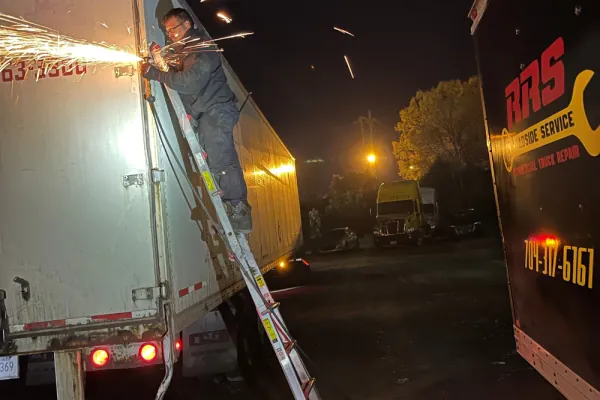
When we come to your yard or roadside stop in Monroe, Charlotte or Union County, the goal is a clear diagnosis and a repair that holds pressure, not a temporary patch.
- Charge and leak-test the trailer air system
- Inspect gladhands, lines, hangers, valves, tanks and brake chambers
- Replace failed seals, lines, fittings or chambers as needed
- Confirm the brakes release and apply correctly before we leave
- Flag related issues that would fail a DOT inspection, like damaged hangers or worn slack adjusters
Learn more about our mobile trailer repair, or see truck repair in Monroe, NC and Charlotte mobile truck repair if your power unit needs work too.
How to cut down on air leaks
- Include a visual air-line and gladhand check in every PM walkaround
- Replace cracked or chafed rubber lines before they split on the road
- Drain trailer tanks regularly so water and oil don’t destroy valves and seals
- Keep gladhand seals clean and replace them when they harden or tear
- Don’t ignore a compressor that cycles constantly; it’s warning you about a leak
Frequently asked questions
How much air loss is too much?
Any steady drop with the system charged and no brakes applied is worth finding. On a DOT inspection, excess air loss can put a vehicle out of service. If gauges fall while you’re parked, get it checked.
Can I keep driving with a small trailer air leak?
A tiny leak can turn into a big one quickly, especially in cold weather. Weak trailer brakes and dragging spring brakes are safety problems, not just maintenance annoyances. Fix it before the next trip when you can.
Do you repair trailer air systems on site?
Yes. Red Rover Service is a mobile diesel and fleet truck repair company. We come to your trailer at the yard, dock or roadside across Monroe, Charlotte, Union County and nearby North and South Carolina towns.
What are your hours?
We’re open Monday through Thursday from 8 AM to 6 PM and Friday from 8 AM to 5:30 PM Eastern. Our techs are ASE certified, and we’re BBB A+ rated, licensed and insured.
Hearing a hiss or losing air pressure? Call Red Rover Service
Don’t wait for a failed inspection or a trailer that won’t release its brakes. Call 704-317-6161 and tell us what you’re hearing and where the trailer is. We’ll send a mobile tech to find the leak and get your trailer holding air again. Fleet managers can also call to build air-system checks into regular preventive maintenance so small leaks get caught before they park a unit.